

When organizations in Halifax and across Atlantic Canada talk about productivity challenges, they often focus on staffing, workflows, or market conditions. Rarely do they look at the meeting room.
But they should.
Poor workplace audio visual doesn’t fail loudly. It fails quietly through dropped words, awkward pauses, repeated questions, and disengaged participants. Over time, those small issues add up to real costs in lost time, slower decision-making, and declining morale.
Nearly half of employees report lacking the flexibility they want at work, and collaboration technology plays a major role in whether hybrid work succeeds or fails.
While these failures may seem minor in isolation, their impact becomes clearer when we look at how they affect day-to-day productivity.
Productivity Loss Is Hiding in Plain Sight

Employees rarely log time as “lost to bad AV,” but the symptoms are easy to recognize:
Meetings running longer than planned
Meetings that start late due to technical issues
Remote participants are struggling to hear or be heard
Conversations dominated by those physically in the room
Ineffective meetings are one of the most persistent and underestimated drains on organizational productivity, particularly in hybrid and distributed environments.
Organizations with well-designed collaboration technology experience higher engagement and better productivity outcomes, particularly in distributed teams.
In Nova Scotia, where teams often collaborate across multiple communities and regions, reliable meeting technology is essential, not optional.
However, productivity issues are rarely caused by a single piece of equipment. More often, they stem from a deeper issue.
Audio Is the Real Make-or-Break Factor
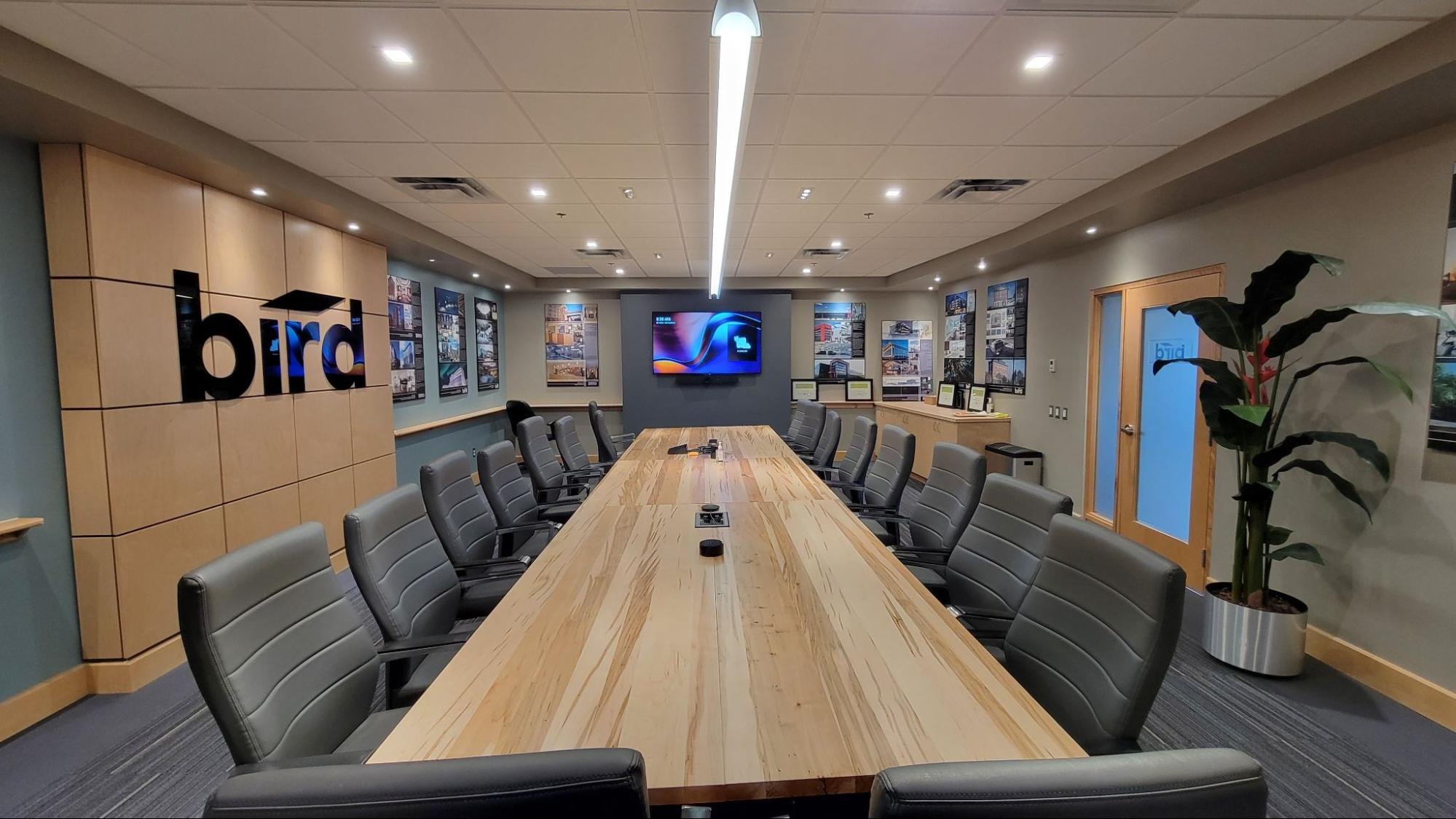
Most organizations prioritize cameras and displays first. In practice, audio is the most critical component of any meeting.
If people can’t hear clearly, they stop contributing.
Common issues we see in Halifax-area offices include:
Microphones that only pick up voices closest to the table
Poorly placed ceiling microphones in echo-prone rooms
Hard surfaces that reflect sound and cause fatigue
HVAC systems overpowering speech
Microsoft’s Work Trend Index shows that poor audio quality increases cognitive load, meaning participants work harder just to follow the conversation, which accelerates meeting fatigue.
As audio quality declines, the effects quickly move beyond efficiency and begin to affect how people feel in meetings.
The Human Impact of Bad Technology
Beyond productivity, poor AV directly affects confidence and psychological safety.
When people worry about being heard, interrupting others, or dealing with technical delays, they speak less. Over time, participation drops, especially for remote or quieter team members.
Research from Google’s Project Aristotle found that psychological safety is the single most important factor in high-performing teams. Technology that introduces friction undermines that safety.
Technology should support participation, not create barriers.
Unfortunately, many organizations continue to rely on systems that were never designed with these human factors in mind.
Why “Good Enough” AV No Longer Works
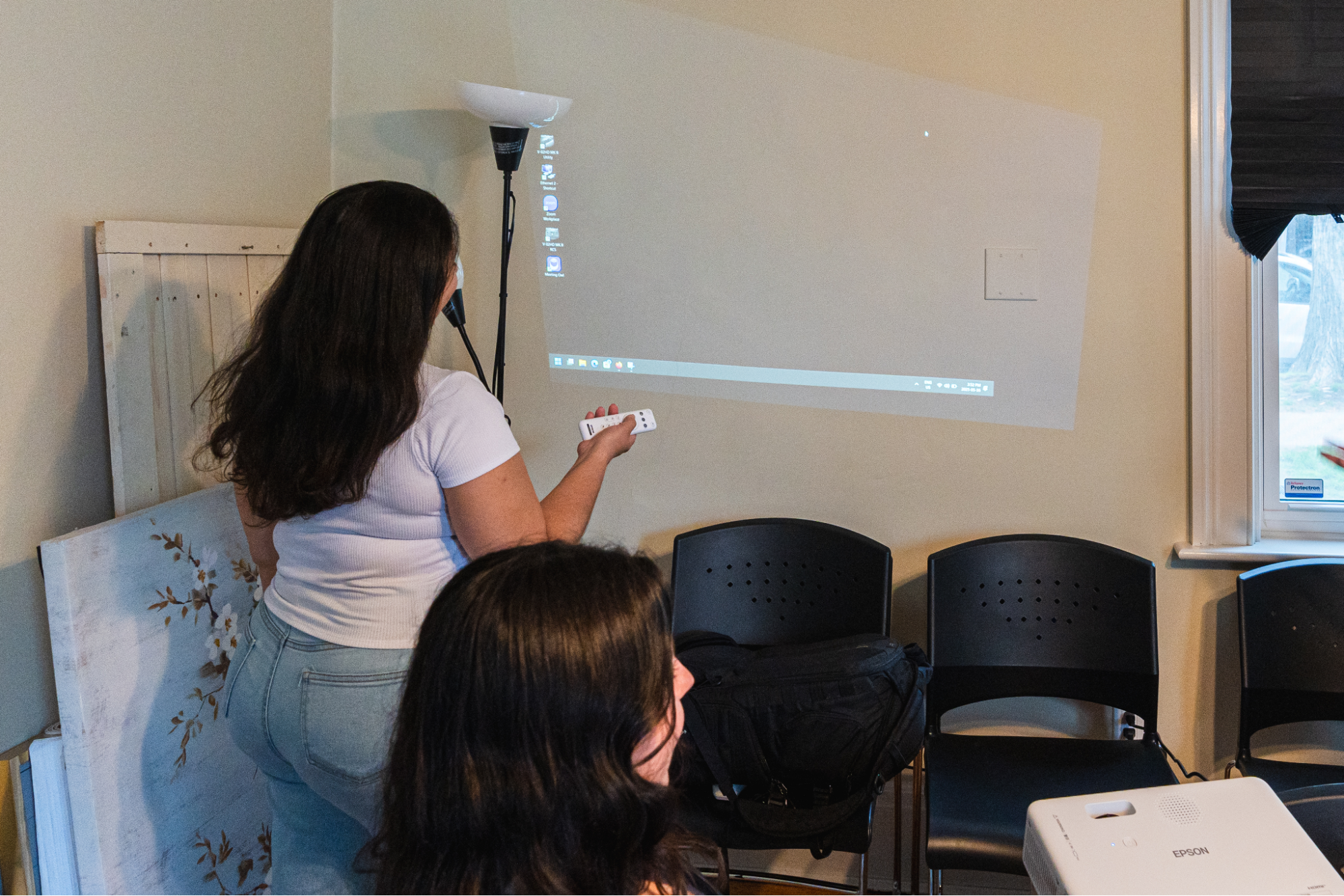
Many Halifax and Atlantic Canadian workplaces still rely on systems designed for:
One speaker, many listeners
In-person meetings only
Minimal collaboration
Hybrid work has fundamentally changed those requirements.
Organizations that modernize collaboration environments experience stronger engagement and faster decision-making than those relying on legacy setups.
Modern workplace AV must be:
Intuitive for non-technical users
Consistent across rooms
Reliable under daily use
Flexible enough to scale
Buying individual products without a clear design strategy almost always leads to frustration.
This is where thoughtful design becomes more important than hardware selection.
Design Matters More Than Hardware
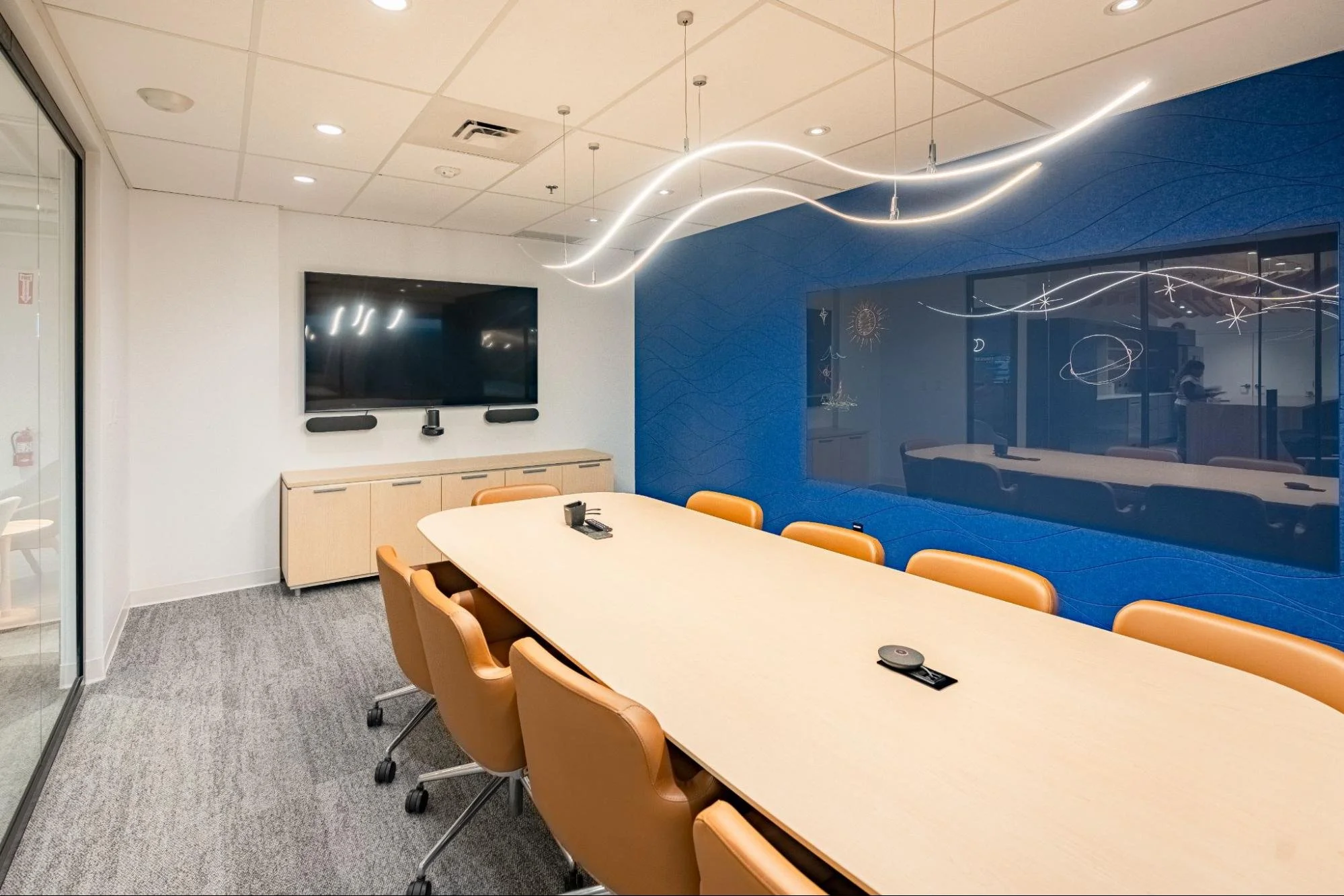
Successful AV outcomes don’t come from a shopping list. They come from understanding how people use a space.
At Holland Technologies, every workplace AV project begins with:
Room layout and sightlines
Acoustic conditions
Lighting quality
Network capacity
Real-world user behaviour
Only then do we design and integrate the right technology for the space.
Once systems are designed with intention, the next challenge becomes consistency.
Standardization Reduces Friction
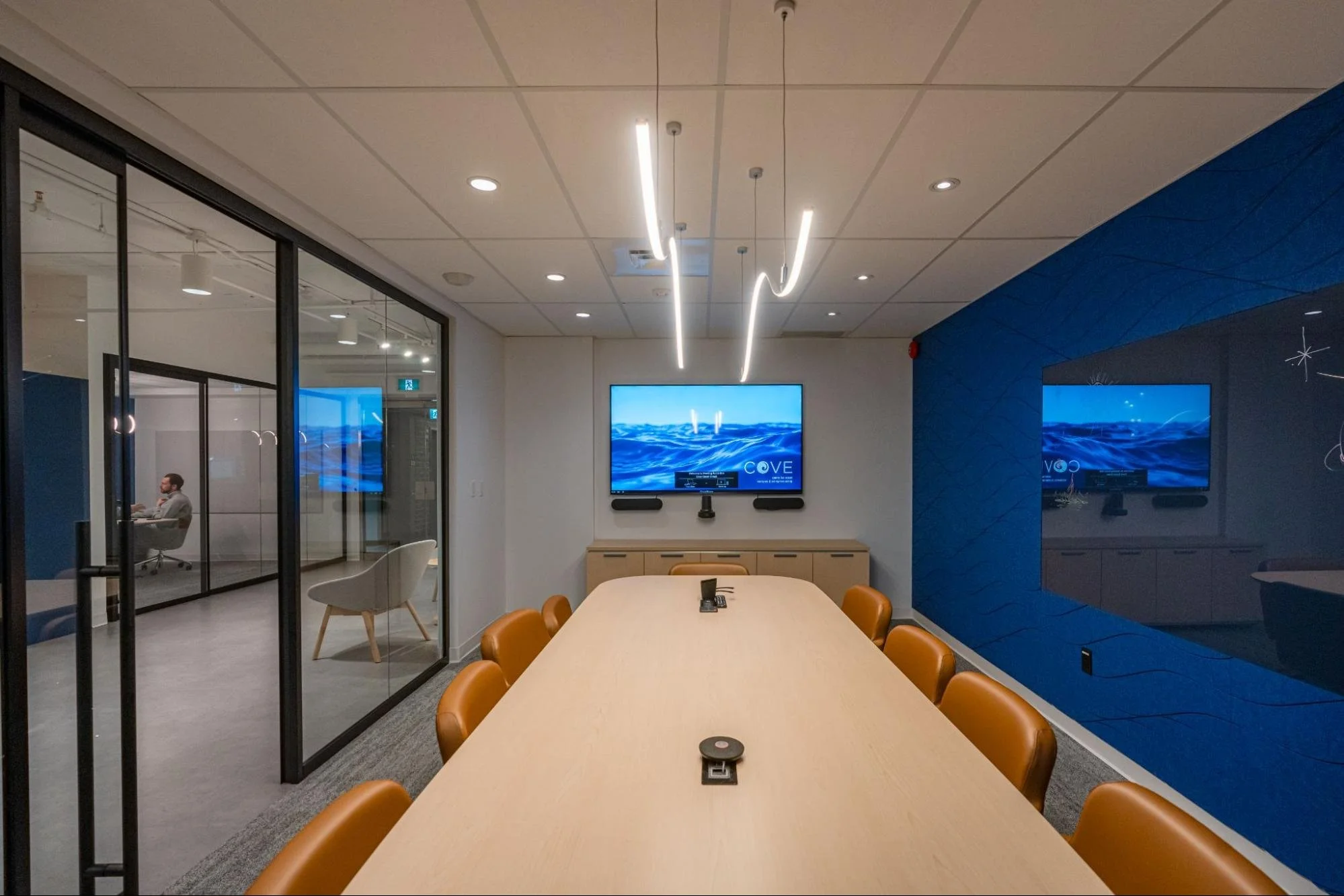
One of the highest hidden costs of bad AV is inconsistency.
When every meeting room works differently, users lose time relearning systems. Support requests increase. Confidence drops.
Microsoft’s research on digital employee experience shows that inconsistent collaboration tools increase friction, reduce adoption, and place additional strain on IT support teams.
Standardizing AV experiences across offices in Halifax or across multiple Atlantic Canadian locations:
Improves adoption
Reduces user error
Lowers IT support demands
Makes meetings easier for everyone
And when friction is removed, the business impact becomes clear.
The Business Case for Better Workplace AV Technology
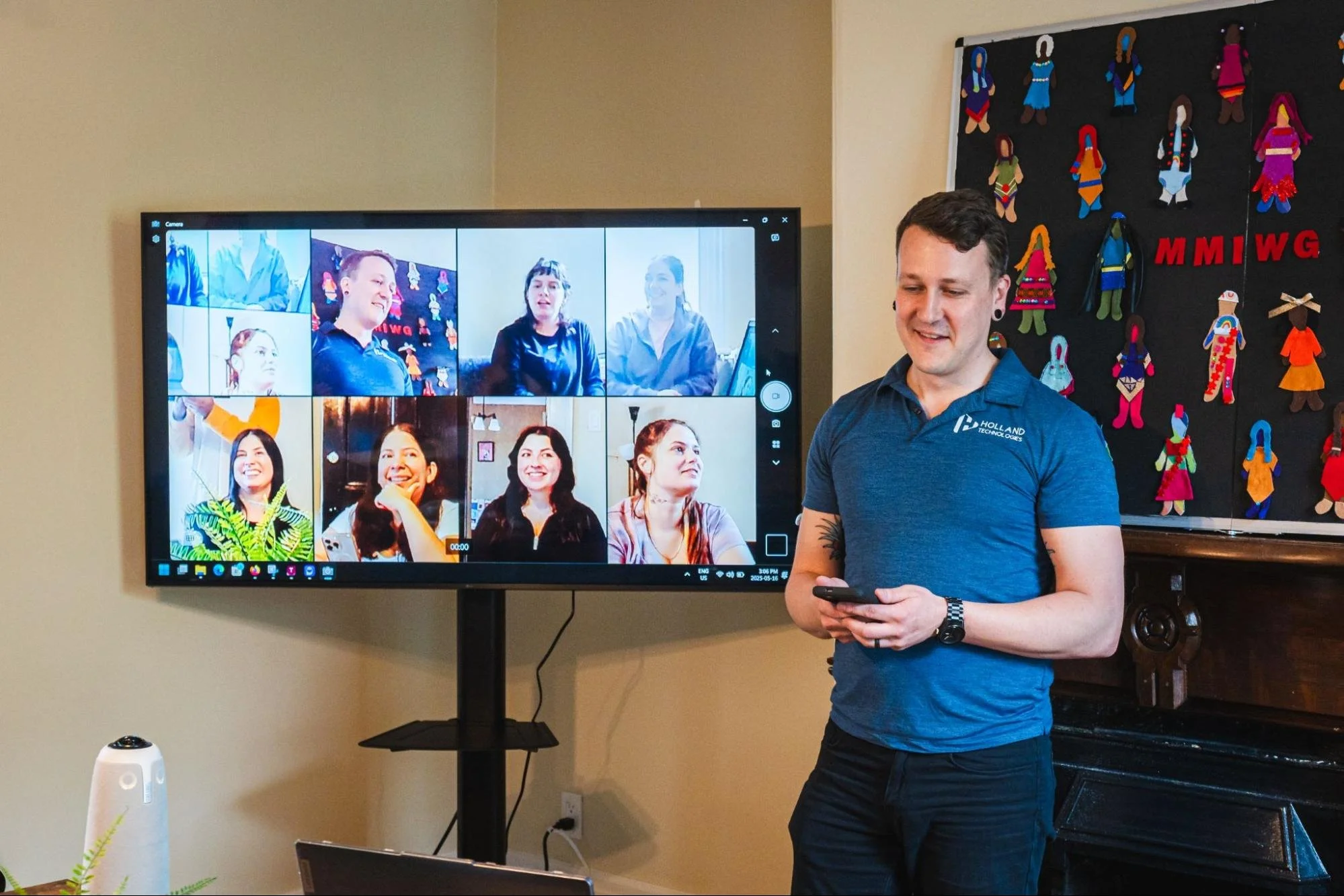
Investing in properly designed workplace AV is not about luxury. It’s about removing friction from daily work.
Improving meeting effectiveness leads directly to better decision-making, stronger engagement, and measurable productivity gains.
Organizations that prioritize collaboration technology consistently see:
Shorter, more effective meetings
Higher employee engagement
Stronger workplace culture
Better hybrid inclusion
At this point, the question is no longer whether better AV matters, but whether organizations can afford to ignore it.
Wrapping Up
Poor AV is not just an inconvenience. It is a silent drain on productivity, morale, and collaboration.
The good news is that it’s solvable.
Holland Technologies works with organizations across Halifax, HRM, and Atlantic Canada to design workplace AV systems that are intuitive, reliable, and human-centred.
If your meetings feel harder than they should, it may be time to take a closer look at the technology behind them.
Contact us to schedule a workplace AV assessment and discover how small changes can make a measurable difference.
